

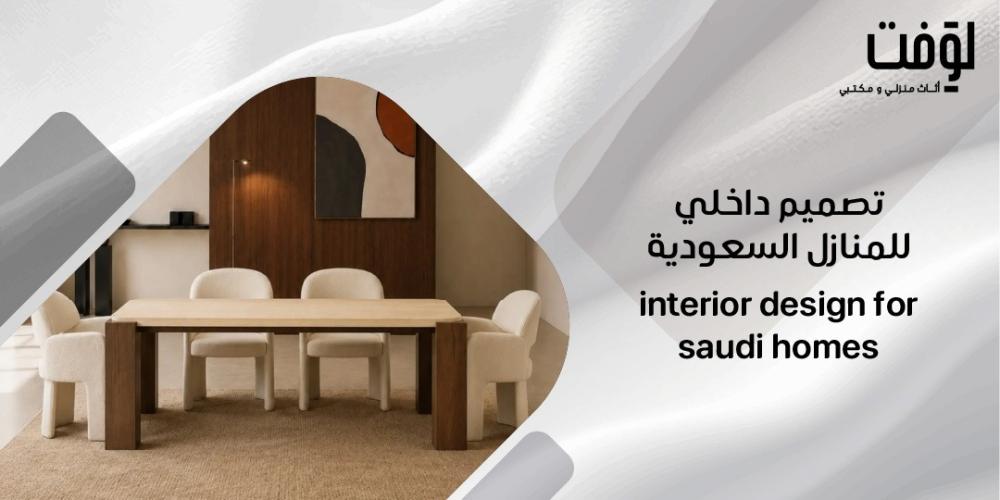
Saudi Home Interior Design occupies a central role in the system of daily living; its purpose extends beyond mere visual appeal to elevating property value and enriching the overall quality of life indoors. When space planning, material choices, and color selection are thoughtfully re-evaluated, a house transforms from a simple residence into an inviting sanctuary that mirrors its occupants' personality and serves their practical needs. Modern trends in Saudi home decor clearly point toward a growing appreciation for warm earth tones, open-plan spaces that promote breathing room and connection, and the strategic use of natural light to bring depth and vitality to every corner.
In this guide, you will explore actionable, well-considered ideas covering style selection tailored to the nature of Saudi homes, optimal furniture arrangement techniques, and how to select a dining table that seamlessly blends with the broader interior scheme. Along each step, you will find exclusive recommendations curated from Loft Store, which features a comprehensive range of contemporary furniture pieces and home accessories designed to harmonize with the refined taste of Saudi residences. Browse Loft Store today to begin your journey toward creating a luxurious Saudi home interior that balances elegance with everyday functionality.
The Importance of Saudi Home Interior Design
When discussing interior design for Saudi homes, attention often centers solely on aesthetic appearance. However, the true scope of design goes far deeper. Successful interior design inherently focuses on planning household traffic flow, positioning furniture to serve daily routines, tailoring lighting schemes to each specific zone, and striking a genuine balance between comfort and practicality.
This balance is precisely what sets apart a home that invokes immediate tranquility upon entry from one that looks stunning in photographs yet feels impractical for daily living. Thoughtful spatial coordination directly influences the inner atmosphere of the home and the daily lifestyle of its residents.
To understand this significance more clearly, it can be explored through three core dimensions:
1. Elevating Daily Quality of Life
Superior interior design is not merely observed by the eye; it is felt across every detail of home life. When furniture layout follows logical spatial flow and lighting levels are comfortable, time spent by the family in the living room or reception area (Majlis) becomes significantly more serene and harmonious.
Reorganizing interior spaces reduces visual clutter—a factor that often weighs heavily on the mind without one realizing its root cause. A well-ordered reception room, an intelligently laid-out dining area, and a living room that allows effortless movement collectively enhance both the psychological and physical well-being of everyone living in the home.
2. Maximizing Spatial Efficiency
Many Saudi homes feature expansive floor plans that remain underutilized. Interior design tailored for Saudi homes conducts a thorough spatial study to transform every neglected corner into a functional, purposeful area.
Coordinating interior layouts to serve the exact household size and practical requirements prevents the common pitfall of overcrowding a room with excessive furniture or leaving it sparse and disjointed. The kitchen, dining room, and corridors—all represent primary areas that warrant meticulous advance planning rather than being left to chance.
3. Enhancing Privacy and Preserving Cultural Identity
Privacy represents an irreplaceable pillar in Saudi home interior design. The Saudi residence possesses a distinct social dynamic that necessitates a clear separation between guest-hosting zones and private family living spaces.
Designing the villa entryway, positioning the main Majlis, and directing spatial movement throughout the home all play pivotal roles in preserving family privacy without compromising generous hospitality. Reorganizing spatial layouts to respect this balance ensures the home aligns with local values and customs, endowing it with an authentic sense of identity rather than an imported aesthetic.
Core Elements of Successful Saudi Home Interior Design
The success of any interior design project for Saudi homes relies not on a single isolated feature, but on the seamless integration of color palettes, lighting schemes, material selections, and floor plan layouts. When these elements work in unison, the space evolves from a series of adjoining rooms into a cohesive environment that reflects refined taste while meeting functional demands.
Each element fulfills a dedicated, essential function: color establishes the overall atmosphere, lighting imparts vitality or warmth as required, and material choices along with furniture pieces define the room's character and tactile quality.
Below are the primary elements explained in detail:
1. Selecting the Right Color Palette
Calm, neutral tones remain the preferred choice in Saudi homes, instilling spaces with a sense of poise and sophistication without causing visual fatigue.
Beige, sand, and warm brown shades construct a cozy color base that complements local architectural styles, while muted gray and olive green introduce maturity and modern flair. Rich color accents—such as brushed gold or deep navy blue—can be introduced in measured doses to maintain overall visual harmony.
2. Distributing Natural and Artificial Lighting
Lighting determines how a occupant perceives a given space—whether it feels expansive or compact, warm or cool.
Generously sized windows invite maximum daylight during the morning hours, reducing reliance on artificial light during the day. Artificial lighting, meanwhile, should be built in layered tiers: recessed spotlights for ambient illumination, statement chandeliers in reception areas to establish formal prestige, and soft accent lamps for bedrooms and cozy reading nooks. This multi-layered distribution ensures every room adapts to its intended mood throughout the day.
3. Planning Open-Concept Layouts
Open-plan spaces have emerged as a defining hallmark of modern interior design in Saudi homes, providing an expansive sense of freedom and flow.
Merging the main living area with the dining room within a unified, connected layout enhances spatial openness and facilitates natural family interaction. At the same time, privacy must be carefully maintained through smart architectural partitions—such as open shelving units, decorative glass screens, or subtle split-level flooring transitions.
4. Selecting Materials and Furnishings
Choosing the right materials and finishes determines both the aesthetic calibre and practical longevity of the home, making it a decision that warrants careful consideration.
Natural wood imparts an irreplaceable visual warmth, whereas marble and porcelain bring an unmistakable touch of luxury to flooring and moisture-prone areas. Metals like stainless steel suit modern kitchens and intricate furniture accents, introducing a contemporary edge that pairs seamlessly with high-end Saudi interior design styles.
Designing Dining Rooms in Saudi Interiors
A dining room is far more than a place for meals; it serves as a central social hub that reflects the home’s hospitality standards and family lifestyle. This grants it a pivotal position within Saudi home interior design, particularly in villas and residences featuring open-plan living arrangements.
In such homes, the dining space becomes an integral component of the broader visual horizon, requiring its elements to harmonize with adjacent rooms in terms of color palette, furniture style, and lighting choices.
1. Positioning Dining Tables in Large Spaces
In expansive rooms, a frequent mistake is placing the dining table in the exact geometric center without calculating clear circulation pathways around it. The fundamental rule when positioning a dining table is leaving a minimum clearance of 90 cm on all sides, allowing guests to sit and stand effortlessly.
A large footprint also permits the inclusion of complementary side pieces, such as a sideboard or display cabinet, provided they do not obstruct traffic flow between the kitchen and the main seating area.
2. Selecting Proper Dimensions
An oversized dining table is not a luxury, but a necessity in many Saudi households that regularly host formal family gatherings and social dinners. A table designed to comfortably seat eight or more individuals aligns naturally with this social lifestyle.
The final choice remains tied to the overarching design aesthetic of the home: a modern table featuring clean geometric lines complements contemporary decor, whereas a rich wood-topped table with brass or gold-finished metal legs suits more opulent settings.
3. Harmonizing Tables with Lighting and Rugs
Pendant lighting suspended above a dining table is more than a decorative accessory; it anchors the spatial weight of the room and adds visual warmth. Ideally, chandeliers or suspended light fixtures should hang at a height of 75 to 90 cm above the tabletop surface to achieve correct visual balance.
An area rug placed underneath should extend well beyond the table footprint to accommodate chairs even when fully pulled out. An undersized rug disrupts spatial proportions and leaves the dining area looking incomplete.
Selecting an Interior Design Company in Saudi Arabia
Once the initial planning phase transitions into execution, homeowners face a critical question: How do you choose the right design firm? Moving from conceptual inspiration to a fully realized living space requires a professional partner who thoroughly understands your lifestyle requirements and translates them with precision.
Before finalizing a contract with any entity, it is advisable to establish a clear budget and articulate your project goals—whether the priority lies in space optimization, aesthetic luxury, or both. This step saves valuable time and prevents misunderstandings down the line.
Key criteria for evaluating top interior design firms in Saudi Arabia include a commitment to providing detailed 3D visualization renders before commencing any physical work, granting the homeowner an accurate preview of the final result before allocating funds to materials or furniture.
1. Reviewing Portfolios and Previous Projects
The primary aspect to evaluate is the firm's executed body of work. Their portfolio reveals their craftsmanship quality, stylistic versatility, and ability to execute Saudi home interior designs that resonate with your personal taste.
Do not rely solely on project photography; reach out to previous clients where possible, verifying that the firm has successfully managed projects similar to yours in terms of square footage, budget parameters, and design style.
2. Pricing Transparency and Clear Contracts
A reputable interior design firm will readily provide an itemized financial proposal outlining costs for every phase—from initial design concepts to procurement and final installation. This level of transparency protects you from unexpected costs mid-project.
Read all contractual terms carefully prior to signing, ensuring every agreed-upon detail is documented in writing, including precise specifications for all specified materials.
3. Timelines and Execution Quality
Project delays remain one of the most widespread challenges in the interior design sector; therefore, adherence to timelines deserves substantial weight when comparing firms. Inquire about the prospective schedule for each project milestone and the firm's protocol for managing unforeseen delays.
Quality execution is as critical as design aesthetics. Meticulous finishing work and strict adherence to material specifications mark the true difference between a successful project and an unsatisfactory outcome.
Top Dining Tables for Saudi Home Interiors
The dining room serves as one of the most expressive spaces regarding a homeowner's personal taste, with the dining table acting as its anchor. At Loft Store, you will find dining tables crafted to international standards, pairing structural durability with refined elegance that meets the demands of Saudi interior design—where luxury and daily functionality coexist effortlessly. Here are two standout selections from Loft worth exploring:
1. Skyscraper Dining Table
The Skyscraper Dining Table embodies grand architectural presence and sophistication within a single design. Spanning generous dimensions of 300×100×75 cm, it serves as an ideal focal point for expansive dining rooms designed to host large family gatherings and formal social evenings.
Finished in a warm beige hue complemented by polished gold-toned legs, this piece imparts a distinct visual identity that harmonizes with both modern and transitional interior schemes. Its core structure is constructed from high-grade stainless steel, renowned for its ability to withstand daily use while preserving its pristine luster over time when maintained with regular care.
In open-plan layouts and spacious dining zones, this table provides a commanding presence, serving as the visual anchor around which the remaining elements of the room are styled.
2. Carrinna Dining Table
The Carrinna Dining Table offers a distinct aesthetic character, featuring a refined porcelain top measuring 200×100×76 cm. It is available in sleek black as well as versatile multi-tonal options designed to suit various interior design directions.
From a practical perspective, its standout feature is a resilient porcelain surface capable of enduring heat, moisture, and daily wear while remaining simple to clean and maintain. To ensure structural stability and safety, it should always be positioned on a level floor surface.
In contemporary or industrial-inspired dining spaces, Carrinna makes a strong visual statement, integrating effortlessly into open floor plans defined by clean lines and neutral or bold color schemes.
Popular Interior Design Styles in Saudi Homes
Interior design options for Saudi homes span a broad spectrum—from crisp modernism and opulent classicism to contemporary Saudi fusion that blends regional heritage with modern luxury. Consequently, every home tells a unique story based on the owner's personal taste and available floor plan.
Selecting a design style is not purely an aesthetic choice; it requires balancing your budget, spatial dimensions, and daily living routine. A compact home may benefit most from modern open-plan principles, whereas an expansive villa may call for the rich depth of classic design or the warmth of contemporary Saudi aesthetics to feel complete.
Here is an overview of the three most popular interior design styles embraced in Saudi homes, detailing what sets each apart to help you select the ideal direction for your space:
1. Contemporary Modern Style
This style relies on clean geometric lines and a neutral palette—such as soft white, gray, and light beige—to create an expansive, airy feel. Modern Saudi interior design prioritizes functional furniture and open layouts that enhance natural light and allow effortless movement, making it an ideal choice for medium-sized homes and flexible budgets.
2. Luxurious Classic Style
Defined by rich visual detail, classic style features elaborate ceiling moldings, carved wall paneling, and a warm palette of ivory, rich beige, and muted gold accents. Statement chandeliers, velvet upholstery, and natural marble form the backbone of this approach. It is best suited for large villas and spacious residences, representing a higher investment while bestowing unmatched architectural grandeur.
3. Contemporary Saudi Style
This style bridges local heritage with modern architectural finishes, placing special emphasis on the Majlis—the heart of hospitality in the Saudi home. It integrates traditional motifs, such as geometric patterns and subtle Arabic calligraphy, alongside modern lighting solutions and streamlined furniture. This approach honors cultural identity without sacrificing modern living comforts, making it adaptable across various room sizes and budgets.
Conclusion and Next Steps
Interior design for Saudi homes is far more than selecting furniture or paint shades; it is a holistic discipline that expresses the identity and refined taste of those who dwell within. Successful design hinges on a delicate balance between local heritage and contemporary aesthetics—achieved through warm earth tones, open-plan spaces that foster freedom of movement, and enduring materials built for daily living. Among all interior elements, central anchor pieces—specifically the dining table—serve as the heart of the space, defining the level of luxury across the entire room.
If you are preparing to design or furnish your home with a sophisticated, cohesive aesthetic, Loft Store is your destination for discovering a wide selection of dining tables and furniture collections built to the highest standards of quality and design. Visit Loft Store today to explore pieces tailored to your space and expressive of your personal style.